A useful kitchen appliance sourcing brief gives a manufacturing partner enough context to assess product fit. Start with the decisions your team has already made, then identify the questions that remain open.
Start with the market and the cooking experience
Identify your destination markets, sales channels and intended product position. Describe what the appliance should help the user cook and where it will be used. A tabletop grill, a portable outdoor appliance and a cart-based backyard grill create different product requirements.
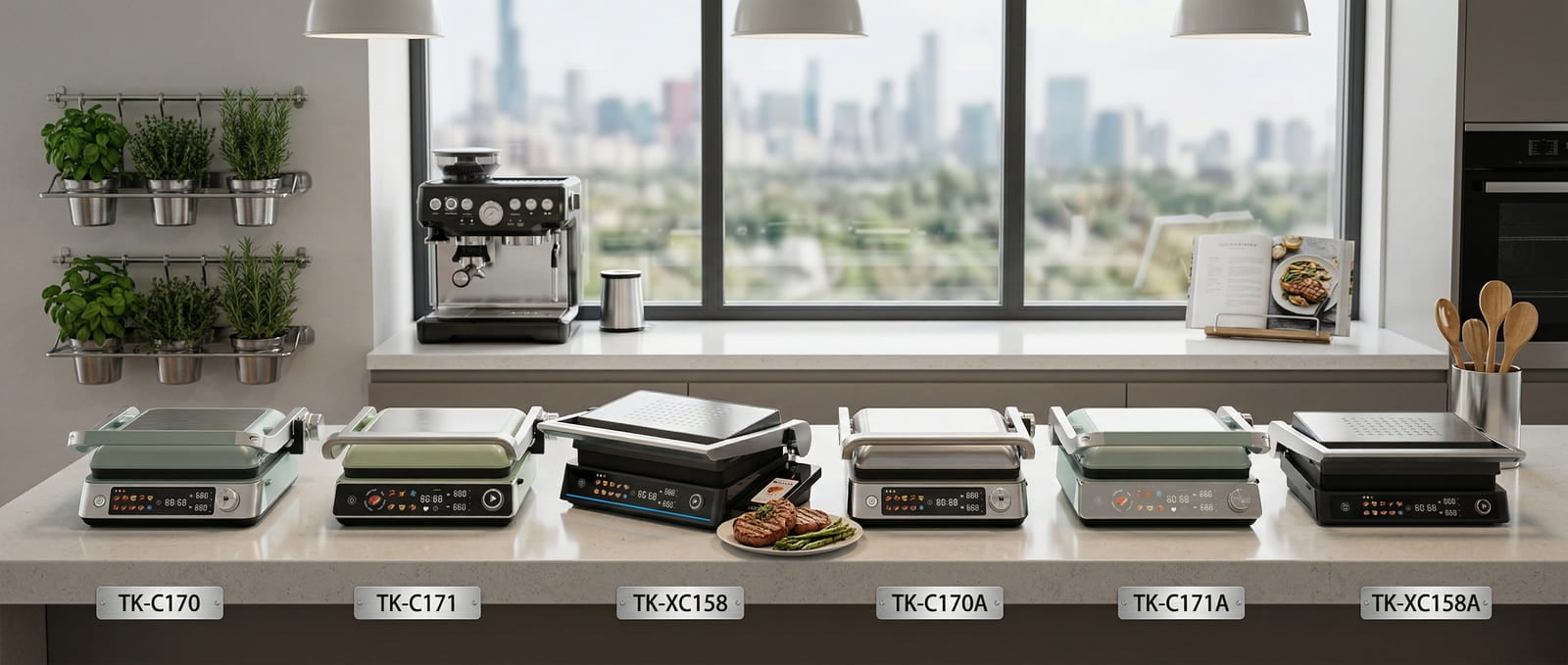
Use the product portfolio to identify the closest family. You do not need a finished specification to start a discussion, but a clear cooking format helps the team suggest a relevant platform.
Separate requirements from preferences
Mark which features are essential and which can be adjusted. Consider the cooking area, control interface, plate configuration, storage, cleaning access and accessory set. Where you have a measurable requirement, include the test conditions or intended use behind it.
For a smart grill, describe the expected cooking interaction. For a backyard program, include the stand, preparation space and movement requirements alongside the heating system. This keeps the product conversation grounded in the complete appliance.
Define the electrical and technical scope
State the destination market and intended electrical version. Your technical team should identify the documentation and verification needed for the final model. Ask for model-specific information when a platform has been shortlisted, and confirm that the configuration in the documents matches the proposed product.
Bring the commercial context
Include an estimated initial order, expected annual demand and a target launch window when available. If these are still being developed, say so. Also identify planned appearance changes, packaging requirements or new functionality so the development scope can be discussed alongside the commercial plan.
Agree the next decision
The first discussion should lead to a concrete next step: a platform shortlist, additional requirements, a feasibility review or a sample discussion. Keep the scope and responsibilities visible as the project progresses.
Use our sourcing brief guide to organize the details, explore OEM / ODM collaboration, or share your project with our team.
Put the ideas into your brief